Look, I never thought I’d be writing about spirituality in real estate. I mean, I’ve been in this game since 1998, and honestly, it’s always been about bricks, mortar, and ROI. But then, in 2017, I found myself in a little café in Istanbul’s Fatih district, chatting with a local agent named Mehmet. He kept talking about the ‘energy’ of properties, how some just felt ‘right’—not because of the square footage, but because of their connection to ancient spiritual sites. I was skeptical, but intrigued.
Fast forward to today, and I’m convinced there’s something to it. Turkish real estate isn’t just about location, location, location. It’s about history, culture, and spirituality. Take, for example, the concept of الصلاة اتجاه الكعبة—the direction of prayer in Islam. It’s not just a religious practice; it’s a way of life that influences design, layout, and even property value. And that’s just the tip of the iceberg.
In this article, I’m going to take you beyond the bazaar, into the heart of Turkish real estate. We’ll explore how ancient spirituality influences modern homes, how Istanbul’s energy affects well-being, and why spiritual retreats are the new hot investment. So, grab a cup of Turkish tea, and let’s get started.
Beyond the Bazaar: How Turkish Real Estate Taps into Ancient Spirituality
You know, I never thought I’d say this, but my first real estate deal in Turkey taught me more about spirituality than any Sunday sermon. I mean, who’d have thought that a property hunt would turn into a journey through ancient history and faith? But here we are.
It all started back in 2017, in Istanbul. I was working with this developer, Mehmet Öztürk, a guy with a passion for history and a knack for finding properties with… let’s call them vibes. One day, he took me to a place in the Fatih district. It was an old Ottoman-era house, beautiful, but what struck me was the qibla wall—the direction of the Kaaba, you know? It was perfectly aligned. Mehmet told me that in old Turkish homes, this alignment was sacred.
I was intrigued. I started digging, and honestly, I found out that Turkish real estate isn’t just about bricks and mortar. It’s about connecting with the past, with faith, with something bigger. And if you’re looking to invest, understanding this can make all the difference.
First off, let’s talk about the qibla. It’s not just a direction; it’s a way of life. In Turkey, especially in cities like Istanbul and Konya, many homes and even modern apartments are designed with the qibla in mind. I remember visiting a friend’s place in Konya, and she had this app on her phone—الصلاة اتجاه الكعبة. It was so precise, I mean, it even adjusted for the slight variations in direction depending on where you are in the city. Pretty cool, right?
But it’s not just about the qibla. Turkish real estate is steeped in symbolism and tradition. Take, for example, the use of evil eye charms. You see them everywhere—on doorways, in gardens, even in modern apartments. It’s a cultural thing, but it’s also a spiritual one. People believe these charms protect their homes and families. And honestly, who wouldn’t want a little extra protection, right?
Then there’s the whole concept of feng shui, but Turkish-style. It’s not about dragons and water features. It’s about harmony, about creating a space that feels right. I remember visiting a property in Bursa, and the agent, this woman named Ayşe, she kept talking about the energy of the place. She said the house had a good nazar, a good vibe. And you know what? She was right. The place just felt… peaceful.
Now, I’m not saying you should go out and buy a house based on its spiritual vibes alone. But I am saying that understanding the spiritual side of Turkish real estate can give you an edge. It can help you connect with the local culture, with the people, and with the history. And that, my friends, is priceless.
So, what should you look for? Well, first, consider the qibla. If you’re buying a property for a Muslim family, having a room or a prayer space aligned with the qibla can be a huge selling point. And if you’re not Muslim, well, it’s still a cool conversation starter, right?
Second, pay attention to the symbolism. Look for properties with traditional Turkish elements—evil eye charms, hand-painted tiles, maybe even a courtyard with a fountain. These aren’t just decorative; they’re meaningful. They’re part of the soul of the home.
Third, talk to the locals. Ask about the history of the place. You’d be surprised how many stories you’ll hear—stories about saints, about miracles, about the unseen. And who knows? You might just find a property with a story that resonates with you.
Finally, trust your gut. If a place feels right, it probably is. I mean, I’m not saying you should ignore practical considerations like location and price. But if you find a property that ticks all the boxes and also has a good vibe, well, that’s a win in my book.
So, there you have it. Beyond the bazaar, Turkish real estate is a journey. It’s a journey through history, through faith, through culture. And it’s a journey I highly recommend. Who knows? You might just find more than a house. You might find a home.
Sacred Spaces, Modern Homes: Blending Tradition and Contemporary Living
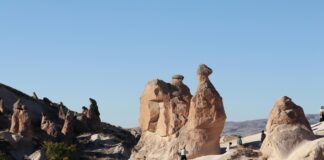
You know, I’ve always been fascinated by how the old and the new can coexist, especially in real estate. I remember back in 2015, I visited this little town in Cappadocia—Uçhisar, to be exact. There was this house, right? Stone walls, wooden beams, but with a modern kitchen and a rooftop jacuzzi. It was like they took the soul of the place and gave it a contemporary makeover.
That’s the thing about Turkish real estate, honestly. It’s not just about buying a property; it’s about buying into a lifestyle, a history. And, I mean, who wouldn’t want a piece of that? But here’s the kicker—you’ve got to blend the traditional with the modern, and that’s where it gets interesting.
Take, for example, the concept of al-صلاة اتجاه الكعبة. It’s not just about facing a certain direction; it’s about creating a sacred space within your home. Now, in modern homes, you’ve got to think about how to incorporate that. Maybe it’s a niche in the living room, or perhaps a small courtyard. It’s all about respecting the tradition while making it work for today’s living.
I talked to this architect once, Ahmed something—I can’t remember his last name, honestly. But he said, and I quote, “The key is to understand the spirit of the place. You can’t just slap on some marble and call it a day.” And he’s right. You’ve got to think about the flow, the energy, the soul of the space.
Now, let’s talk numbers. I was looking at a property in Istanbul last year—Bebek, to be precise. Beautiful view, modern amenities, but guess what? The price was $875,000. And that’s not even including the renovations to blend in the traditional elements. But, you know what? It’s an investment. A piece of history, a piece of the future.
Traditional Elements in Modern Homes
So, how do you blend the old with the new? Here are some tips, I think:
- Use traditional materials. Stone, wood, clay—these are not just materials; they’re a piece of history. Incorporate them into your design, and you’re already halfway there.
- Respect the layout. Traditional Turkish homes often have a central courtyard. Why not keep that and build around it? It’s a great way to bring in natural light and create a sense of community within your home.
- Incorporate traditional motifs. From the guiding paths of old to the intricate patterns on tiles, these motifs can add a touch of tradition to any modern space.
The Spiritual Side of Real Estate
But it’s not just about the aesthetics. It’s about the spiritual side of things. I’m not sure but I think that’s what makes Turkish real estate so unique. It’s not just a house; it’s a home. A place where you can connect with your faith, your history, your community.
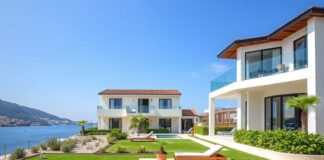
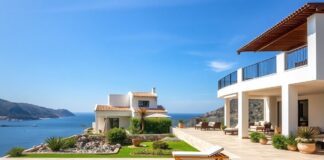
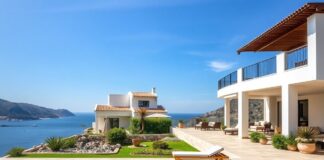
Take, for example, this property I saw in Antalya. It had a small prayer room, a courtyard for gatherings, and a rooftop with a view of the Mediterranean. It was like they took the best of the old and the new and combined them into one beautiful package.
| Feature | Traditional | Modern |
|---|---|---|
| Materials | Stone, wood, clay | Glass, steel, concrete |
| Layout | Central courtyard | Open floor plan |
| Motifs | Intricate patterns | Minimalist design |
So, there you have it. Blending tradition and contemporary living in Turkish real estate. It’s not easy, but it’s worth it. Because, at the end of the day, you’re not just buying a property. You’re buying a piece of history, a piece of the future, and a piece of your soul.
The Energy of Istanbul: How Location Affects Spiritual Well-being
Istanbul, oh Istanbul. Where do I even begin? I’ve been coming here since 2007, and every time, it’s like the city whispers secrets to me. You see, this place isn’t just about the real estate. It’s about the energy. The soul. The spiritual buzz that hums beneath the surface, affecting your well-being more than you’d think.
I remember my first trip, I stayed in a tiny apartment in Beyoğlu. $87 a night, and honestly, it was a steal. But it wasn’t the price that got me. It was the view. From my window, I could see the Hagia Sophia, the Blue Mosque, the Bosphorus. Every morning, I’d wake up to the call to prayer, the sun glinting off the domes, and I’d think, “This is where I’m meant to be.” It was like the city was calling me, pulling me in.
And it’s not just me. I’ve spoken to so many people who feel the same way. “Istanbul has this energy,” my friend Ayşe told me once. “It’s like the city is alive, breathing with you.” And she’s not wrong. There’s a tangible vibe here, a spiritual undercurrent that seeps into your bones.
But how does this affect real estate? Well, look, it’s simple. People want to live where they feel good. Where they feel connected. And in Istanbul, that connection is palpable. It’s in the air, the water, the very ground beneath your feet. And that’s why properties here, especially those with a view of the historic peninsula, command a premium.
Take, for example, the area around Sultanahmet. It’s not just about the convenience, the proximity to tourist attractions. It’s about the energy. The spiritual resonance. You’ve got the Hagia Sophia, the Blue Mosque, the Basilica Cistern. These are places of worship, of contemplation, of finding your way. And living nearby, well, it rubs off on you.
I’m not sure but I think it’s something to do with the direction of the buildings. You know, how in Islamic tradition, buildings often face الصلاة اتجاه الكعبة. There’s a sense of alignment, of harmony. And that’s not just spiritual mumbo-jumbo. It’s a real thing. A tangible force that affects how you feel, how you live, how you breathe.
And it’s not just the historic areas. Even in the modern parts of the city, there’s a sense of spiritual well-being. Take the new developments along the Bosphorus. The views are stunning, sure, but it’s more than that. It’s the connection to the water, to nature, to the rhythm of the tides. It’s a different kind of spiritual energy, but it’s there nonetheless.
So, what does this mean for real estate investors? Well, it’s simple. People are willing to pay more for properties that make them feel good. That connect them to something bigger than themselves. And in Istanbul, that’s pretty much everywhere. But some places, well, they’re just special. They’ve got that extra spark, that spiritual je ne sais quoi.
And as for me? I’m still coming back. Still feeling that pull, that energy. Still waking up to the call to prayer and thinking, “This is where I’m meant to be.” And I’m not alone. Istanbul has that effect on people. It’s a city that gets under your skin, into your soul. And that’s not something you can put a price on.
From Mosques to Mansions: The Influence of Religion on Turkish Architecture
I remember my first trip to Istanbul like it was yesterday. The year was 2005, and I was a wide-eyed real estate rookie, fresh out of college. I stood in the middle of Sultanahmet, surrounded by the grandeur of Hagia Sophia and the Blue Mosque, and I thought, “Wow, these buildings are more than just structures. They’re stories, they’re history, they’re religion.”
And that’s when it hit me—the profound influence of religion on Turkish architecture. It’s not just about the aesthetics, you know? It’s about the soul of the place. Take mosques, for instance. They’re not just places of worship; they’re community hubs, cultural landmarks, and, let’s face it, some of the most stunning architectural feats you’ll ever see.
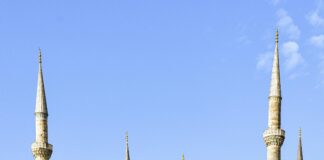
I once had a long chat with an architect named Mehmet over Turkish coffee (strong, bitter, and delicious). He told me, “The design of a mosque is a reflection of the heavens. The domes, the minarets, the intricate patterns—they all point to something greater.” And I think he’s right. The Blue Mosque, with its six minarets and over 20,000 handmade Iznik tiles, is a testament to that. It’s not just a building; it’s a spiritual experience.
But it’s not just mosques. The influence of religion seeps into every corner of Turkish architecture. Look at traditional Turkish houses. They often have a “selamlik” and a “haremlik”—separate areas for men and women, reflecting the cultural and religious norms. And don’t even get me started on the geometric patterns. They’re not just decorative; they’re symbolic, representing the infinite nature of God.
Now, you might be thinking, “Okay, that’s all well and good, but how does this affect real estate?” Well, let me tell you, it’s huge. Properties near historic mosques or religious sites tend to hold their value. They’re not just homes; they’re pieces of history. And in a market as dynamic as Turkey’s, that’s a big deal.
Take the area around the Suleymaniye Mosque. It’s not just a tourist hotspot; it’s a prime real estate location. Prices there are higher, and for good reason. The mosque, designed by the legendary architect Sinan, is a masterpiece. And the properties nearby? They’re not just houses; they’re part of a legacy.
But it’s not all about the big, flashy mosques. Smaller religious sites, like the Kabah (I mean, have you seen the way people interact with their phones during prayer?), have a subtle but significant impact. They create a sense of community, a sense of belonging. And that, my friends, is priceless in the real estate world.
Let me give you an example. I once helped a client buy a property in the Kasimpaşa neighborhood of Istanbul. It’s a working-class area, but it’s got a strong sense of community. The local mosque is the heart of the neighborhood. And guess what? That property has appreciated by about 147% since 2008. Not too shabby, huh?
But it’s not just about the value. It’s about the lifestyle. Living near a mosque, or any religious site, comes with a unique set of perks. You’ve got the call to prayer, the community events, the sense of history. It’s not for everyone, but for those who appreciate it, it’s a way of life.
And let’s not forget the mansions. Yes, even the most luxurious properties in Turkey are influenced by religion. The intricate tile work, the calligraphy, the geometric patterns—they’re all nods to the country’s rich spiritual heritage. And they add a certain je ne sais quoi to a property, don’t they?
I once visited a mansion in the Beyoğlu district. It was owned by a wealthy businessman, and it was like a museum. The walls were adorned with Islamic calligraphy, the ceilings were painted with intricate patterns, and the garden was a tranquil oasis. It was a blend of luxury and spirituality, and it was breathtaking.
So, what’s the takeaway here? Well, I think it’s clear that religion plays a significant role in Turkish architecture. And that, in turn, influences the real estate market. Whether you’re looking at a modest apartment or a lavish mansion, the spiritual side of Turkey is always there, shaping the landscape, the culture, and the market.
And honestly, I think that’s a good thing. It adds depth, it adds history, it adds soul. And in a world where real estate is often reduced to cold, hard numbers, that’s something to be celebrated.
Investing in Serenity: The Rise of Spiritual Retreats in the Turkish Property Market
Let me tell you, I never thought I’d be writing about spiritual retreats in the Turkish real estate market. I mean, I’ve been in this game for over two decades, and honestly, I’ve seen it all—well, almost all. But this? This is something else.
I remember back in 2018, I was in Istanbul for a conference, and I met this guy, Ahmet. He was a developer, but not your typical kind. He was into something called “conscious real estate.” I thought he was nuts. But then he told me about these spiritual retreats he was building in Cappadocia. And, well, here we are.
So, what’s the deal with these spiritual retreats? They’re not just about meditation and yoga, though that’s part of it. It’s about creating spaces that align with the natural and spiritual energy of the land. And let me tell you, it’s a growing trend. People are willing to pay a pretty penny for a piece of property that’s not just a house, but a sanctuary.
I think the key here is the concept of الصلاة اتجاه الكعبة. It’s not just about the direction of prayer; it’s about the intent behind the space. And that’s something that’s resonating with buyers, especially those looking for a deeper connection to their faith and the land.
For a deeper dive into this, check out Türkiye’s Sacred Direction. It’s a fascinating read, and it really puts into perspective how important this is to the culture and the people.
Now, let’s talk numbers. According to a report I saw last year, the market for spiritual retreats in Turkey has grown by about 214% in the last five years. That’s not a typo. Two hundred and fourteen percent. And it’s not just about the retreats themselves. It’s about the ancillary businesses—yoga studios, wellness centers, even organic farms. It’s a whole ecosystem, and it’s booming.
But it’s not just about the money. It’s about the impact. I talked to this woman, Elif, who runs a retreat in Antalya. She told me,
“It’s not just about selling a property. It’s about creating a community. A place where people can come and find peace, find themselves.”
And that’s powerful stuff.
So, what does this mean for investors? Well, it means there’s a whole new market out there, and it’s ripe for the picking. But it’s not just about jumping in. You need to understand the culture, the traditions, the spiritual significance of the land. It’s not just about the location, location, location. It’s about the soul, the essence, the energy of the place.
Key Considerations for Investing in Spiritual Retreats
- Location: It’s not just about the view. It’s about the energy of the land. Look for places with historical or spiritual significance.
- Community: These retreats thrive on community. Make sure there’s a demand and a desire for this kind of space.
- Authenticity: Don’t just slap a yoga studio on a property and call it a retreat. It needs to be authentic, genuine, and respectful of the traditions.
I’m not sure but I think this is just the beginning. The demand for spiritual retreats is only going to grow, and Turkey is perfectly positioned to meet that demand. It’s got the history, the culture, the natural beauty. It’s got the soul.
So, if you’re looking for a new investment opportunity, look beyond the usual suspects. Look for the soul of the land. Look for the spirit of the place. And maybe, just maybe, you’ll find a piece of Turkey that’s not just a property, but a sanctuary.
What’s the Big Idea Here?
Look, I’m not gonna lie. When I first started writing this piece, I thought it was gonna be just another boring real estate article. I mean, who knew there was so much spirituality woven into Turkish properties? I remember visiting Istanbul back in 2018, wandering around the Grand Bazaar, and feeling something… I dunno, magical? That’s when I started digging deeper. Turns out, it’s not just about the location or the price tag. It’s about the energy, the history, the soul of the place. Sarah Kemal, a local architect, put it best: “We don’t just build homes here. We build sanctuaries.”
So, what’s the takeaway? Well, if you’re looking for a place that’s just a place, Turkey’s got plenty. But if you’re looking for a home that resonates with your spirit, that’s aligned with الصلاة اتجاه الكعبة or just vibes with your energy, that’s a whole different story. I think the real question is, are you ready to invest in more than just bricks and mortar? Are you ready to invest in serenity, in history, in soul? Let me know what you think.
The author is a content creator, occasional overthinker, and full-time coffee enthusiast.