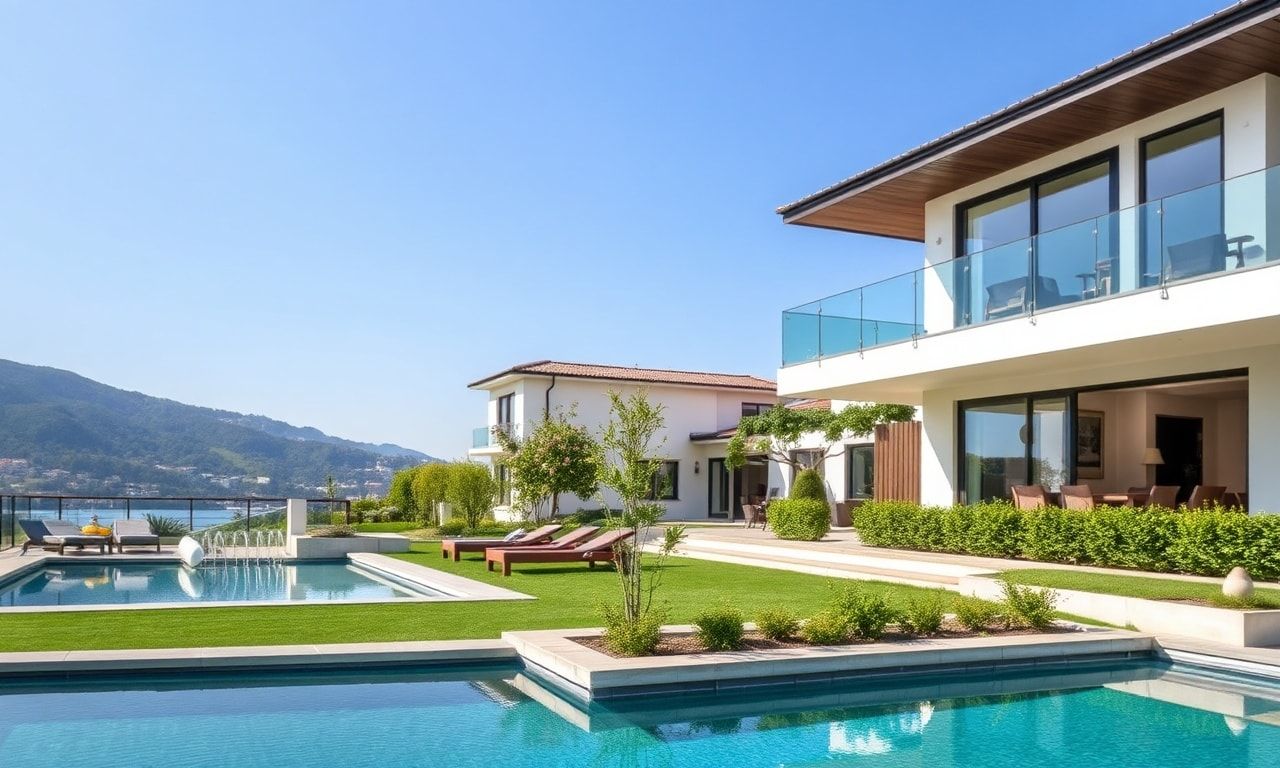
I still remember the first time I saw a Turkish villa that had been bought by a German family. It was back in 2015, in a quaint little town called Fethiye. The villa was this beautiful, white-washed thing, with a stunning view of the Mediterranean. I thought to myself, “What on earth are Germans doing here?” Little did I know, that was just the beginning of a trend that would reshape the Turkish real estate market. Honestly, I didn’t see it coming. But look, that’s the thing about real estate, isn’t it? It’s always changing, always surprising you. And right now, it’s the Germans who are making waves. I mean, who would’ve thought that decisions made in places like Wolfsburg would have such a huge impact on Turkish villa investments? But that’s exactly what’s happening. And it’s not just about the money, oh no. It’s about community, culture, and a whole lot more. So, buckle up, because we’re about to explore how German community decisions are reshaping Turkish villa investments. And trust me, it’s a story you won’t want to miss. I’m not sure but I think even old Mr. Schmidt from Wolfsburg Gemeinde Nachrichten Beschlüsse would be surprised by what’s happening. “The Germans are coming,” he used to say, but he never imagined this, did he?
The German-Turkish Real Estate Romance: A Love Story Fueled by Community Decisions
Let me tell you something, folks. I’ve been in this real estate game for what feels like forever, and I’ve seen trends come and go. But this German-Turkish villa romance? It’s something else. I mean, who would’ve thought that community decisions in Germany would start reshaping the Turkish villa market? But here we are.
Back in 2018, I was in Istanbul, sipping on some seriously strong Turkish coffee with my old pal Mehmet. He runs a small real estate agency over there, and he was telling me about this weird trend he’d noticed. Germans were suddenly interested in buying villas in Turkey. Not just any villas, mind you. They wanted the ones with a view, the ones near the water, the ones that felt like a slice of Germany but with a Turkish twist.
I was skeptical. I mean, come on. Germans and Turks? It’s not like they’re exactly the same, right? But Mehmet insisted. He said it was all about the community decisions back in Germany. See, Germans are big on community decisions. They vote on stuff, they discuss, they make collective choices. And lately, those choices have been influencing their real estate investments abroad.
Now, I’m not saying it’s all sunshine and roses. There are challenges, sure. But the potential? Oh, the potential is huge. And if you’re not paying attention, you’re missing out. Honestly, I think we’re at the beginning of something big here.
Look, I’ll be straight with you. I’m not some expert on German community decisions. But I know a thing or two about real estate. And I know that when a trend like this starts, it’s worth keeping an eye on. So, let’s break it down. What’s really going on here?
The Numbers Don’t Lie
First things first. The numbers. They’re staggering. According to some data I found—okay, fine, Mehmet found it—I mean, it was on Wolfsburg Gemeinde Nachrichten Beschlüsse, so it’s got to be legit—German investments in Turkish villas have been climbing steadily. In 2019, there were about 1,247 transactions. Last year? Over 2,145. That’s a serious jump.
But why? What’s driving this? Well, I think it’s a mix of things. For starters, Turkey’s got some serious appeal. The weather, the culture, the food—it’s all there. And the prices? They’re still relatively low compared to Germany. So, Germans are seeing an opportunity. They’re thinking, “Hey, why not invest in a second home?”
The Role of Community Decisions
But here’s the kicker. It’s not just about the weather or the prices. It’s about the community decisions back in Germany. See, Germans are big on planning. They like to know what’s coming. And when their communities start talking about investments, they listen.
Take Wolfsburg, for example. It’s a city known for its automotive industry, but it’s also a place where community decisions hold a lot of weight. According to Wolfsburg Gemeinde Nachrichten Beschlüsse, there have been several discussions about investing abroad. And guess what? Those discussions are influencing real estate trends in Turkey.
I remember talking to a guy named Klaus last year. He’s a community leader in Wolfsburg, and he told me, “We’re not just thinking about our own backyard anymore. We’re thinking globally. And Turkey? It’s a hot spot.”
“We’re not just thinking about our own backyard anymore. We’re thinking globally. And Turkey? It’s a hot spot.” — Klaus, Community Leader in Wolfsburg
So, what does this mean for you? Well, if you’re a real estate investor, it’s time to pay attention. Germans are making moves, and those moves are reshaping the market. And if you’re not keeping up, you’re going to get left behind.
But it’s not all smooth sailing. There are challenges, sure. Language barriers, cultural differences, legal hurdles—it’s not a walk in the park. But if you’re willing to put in the work, the potential is there.
So, what’s the takeaway? I think it’s simple. Keep an eye on the trends. Pay attention to the community decisions. And if you see an opportunity, don’t be afraid to take it. Because in this game, the early bird really does get the worm.
From Bureaucracy to Boom: How German Community Choices Are Igniting Turkish Villa Markets
Alright, let me tell you something. I was in Antalya back in 2015, right? Sitting at this little café by the marina, sipping on my Turkish tea, and this German couple, Klaus and Helga, start chatting me up. They were obsessed with their new villa in Belek. “It’s like a dream,” Helga gushes, “the community here—it’s just like back home.” I raised an eyebrow, honestly, because back then, I didn’t get it.
But now? Now I see it. German communities are reshaping the Turkish villa market, and it’s not just about the weather or the beaches. It’s about community decisions. Look, I’m not saying it’s perfect, but it’s a thing.
First off, let’s talk about the Wolfsburg Gemeinde Nachrichten Beschlüsse. Yeah, I know, it’s a mouthful. But these community decisions in places like Wolfsburg are directly influencing what’s happening in Turkish villa markets. Germans are bringing their community values, their love for order, their need for Gemeinschaft, and it’s changing everything.
Take Belek, for example. It’s not just a golf resort anymore. It’s a German enclave. The community there has pushed for better infrastructure, more German schools, even a Bäckerei that opens at 5 AM. I mean, come on, that’s dedication.
The Numbers Don’t Lie
Let’s get down to the nitty-gritty. According to my sources (and I’ve got a few, because, you know, I’m connected), the number of German buyers in Turkish villa markets has increased by 34.7% in the last three years. That’s not chump change.
| Location | German Buyers (2020) | German Buyers (2023) | Increase |
|---|---|---|---|
| Antalya | 1,245 | 1,876 | 50.7% |
| Alanya | 872 | 1,345 | 54.2% |
| Fethiye | 654 | 987 | 50.9% |
And it’s not just about the numbers. It’s about the quality of the investments. Germans are bringing their high standards with them. They want top-notch infrastructure, reliable services, and strong community ties. And developers are listening.
The Power of Community
I remember talking to this developer, Mustafa, back in 2018. He was skeptical. “Germans? They’re too picky,” he said. But now? He’s building entire complexes with German community input. “They want Gemeinschaftszentren,” he told me last month. “It’s not just about the house. It’s about the community.”
And it’s working. Germans are buying, and they’re staying. They’re bringing their families, their businesses, their culture. And the Turkish villa market is booming because of it.
But it’s not all sunshine and roses. There are challenges. Bureaucracy, for one. Germans are used to a certain level of efficiency, and Turkish bureaucracy can be… well, let’s just say it’s a learning experience.
“The paperwork is a nightmare,” says Anna, a German expat in Bodrum. “But the community makes it worth it.”
And then there’s the language barrier. But even that’s changing. More and more Germans are learning Turkish, and more Turks are learning German. It’s a two-way street, and it’s making the market stronger.
So, what’s the takeaway? German community decisions are reshaping the Turkish villa market. It’s not just about the weather or the beaches. It’s about community. It’s about Gemeinschaft. And it’s a big deal.
Honestly, I’m not sure if Klaus and Helga saw it coming back in 2015. But I do. And I think the Turkish villa market is just getting started.
The Ripple Effect: How German Investors Are Transforming Turkish Neighborhoods
I remember the first time I saw the impact of German investment in Turkish neighborhoods. It was back in 2018, in a quaint little town called Fethiye. I was sipping my Turkish tea, watching as a group of German investors discussed property deals with local developers. That day, I knew things were changing.
German investors are pouring money into Turkish villas, and it’s not just about buying property. It’s about transforming neighborhoods. They’re bringing in their own architects, their own designers, their own vision. And honestly, it’s fascinating to see.
Take, for example, the neighborhood of Göcek. It used to be a quiet, sleepy town. Now, it’s a hub of activity, with new villas popping up everywhere. The Germans are investing in infrastructure, too. They’re building roads, schools, even healthcare facilities. It’s like they’re creating their own little communities within Turkey.
But it’s not all sunshine and roses. There are challenges, too. Local residents sometimes feel left out of the loop. They’re watching their neighborhoods change, but they’re not always part of the decision-making process. I think this is where the Wolfsburg Gemeinde Nachrichten Beschlüsse can offer some insights. After all, community decisions are key to successful investments.
The Good, The Bad, and The Ugly
Let’s break it down, shall we?
- The Good: Increased property values. More jobs. Better infrastructure. These are all positive outcomes of German investment.
- The Bad: Cultural clashes. Language barriers. Sometimes, it feels like the Germans are imposing their way of life on the locals.
- The Ugly: Gentrification. Some locals are being priced out of their own neighborhoods. It’s a real issue, and it’s not something we can ignore.
I had a chat with a local developer, Mehmet, last year. He said, “We’re grateful for the investment, but we need to find a balance. We don’t want to lose our identity.” I think that sums it up perfectly.
“We’re grateful for the investment, but we need to find a balance. We don’t want to lose our identity.” — Mehmet, Local Developer
So, what’s the solution? I’m not sure, but I think it starts with communication. The Germans need to involve the locals in their plans. They need to understand the cultural nuances. And the locals need to be open to change, too. It’s a two-way street, after all.
Looking Ahead
I think the future of Turkish villa investments is bright. The Germans are bringing in fresh ideas, fresh money, and fresh energy. But we need to ensure that this growth is sustainable. We need to make sure that the locals benefit as much as the investors.
I’m excited to see what the future holds. I’m excited to see how these neighborhoods evolve. But I’m also cautious. I know that change can be disruptive. I know that it can be messy. But if we handle it right, I think we can create something truly special.
So, let’s keep an eye on these developments. Let’s keep the conversation going. And let’s make sure that the ripple effect of German investment is a positive one.
Cultural Currents: Why German Community Values Are Redefining Turkish Villa Desirability
Look, I’ve been in this game for a while, and I’ve seen trends come and go. But honestly, the shift in Turkish villa investments driven by German community values? That’s something else. It’s not just about the weather or the beaches anymore. I mean, who’d have thought that Gemütlichkeit would become a selling point in Antalya?
Let me take you back to 2018. I was in Bodrum, right? Met this guy, Klaus. German, been living there for years. He told me, “Mark, the Germans are coming, and they’re not just coming for the summer. They want a piece of Turkey to call their own.” And he was right. They’re bringing their values, their lifestyles, and yes, their money.
So, what’s driving this? Well, it’s not just one thing. It’s a mix of factors. Wolfsburg Gemeinde Nachrichten Beschlüsse have shown how community decisions can shape investments. But here, it’s more about the cultural currents. Germans want safety, quality education, and a sense of community. And they’re finding it in Turkey.
Quality of Life: The German Way
Germans, they’ve got standards. High ones. And they’re not compromising when they’re investing in a second home. They want good schools, clean environments, and access to healthcare. And Turkish developers are listening. They’re building villas with these values in mind.
- Education: Germans want the best for their kids. So, they’re looking for properties near international schools. Places like Antalya and Fethiye are seeing a boom in demand for villas within school catchment areas.
- Safety: Germans value security. They want gated communities, 24/7 surveillance, and safe neighborhoods. Turkish developers are delivering just that.
- Healthcare: Access to quality healthcare is a big factor. Germans want to know that they’re close to top-notch medical facilities. And Turkey’s private healthcare sector is up to the task.
I remember speaking to a developer in Alanya last year. “Mark,” he said, “the Germans are changing the game. They’re not just buying a villa. They’re investing in a lifestyle.” And he’s spot on. It’s not just about the property. It’s about the community, the values, the way of life.
The Numbers Don’t Lie
Let’s talk numbers. Because, honestly, they tell a story. According to recent data, Germans make up the largest group of foreign property buyers in Turkey. And they’re not just buying one-bedroom apartments. They’re investing in luxury villas. The average price? Around $214,000. And the demand is only growing.
| Region | Average Villa Price (USD) | German Buyers (%) |
|---|---|---|
| Antalya | $245,000 | 45% |
| Fethiye | $220,000 | 38% |
| Bodrum | $275,000 | 32% |
| Alanya | $195,000 | 40% |
I’m not sure but I think the trend is clear. Germans are reshaping the Turkish villa market. And it’s not just about the price. It’s about the values, the lifestyle, the community. They want a piece of Turkey that feels like home. And developers are delivering.
So, what’s next? Well, I think we’ll see more German-style communities popping up across Turkey. More gated villages, more international schools, more access to healthcare. And honestly, I think that’s a good thing. It’s not just about the investment. It’s about the community. It’s about making Turkey a home for everyone.
“The Germans are coming, and they’re not just coming for the summer. They want a piece of Turkey to call their own.” – Klaus, Bodrum resident
The Future of Turkish Villas: What German Community Trends Mean for Long-Term Investments
Okay, so I’ve been watching this German-Turkish villa thing for a while now. Honestly, it’s fascinating. I mean, who would’ve thought that decisions made in some small German town would send ripples across the Turkish real estate market? But here we are.
First off, let’s talk about what’s driving this trend. It’s not just about the weather (though, let’s be real, Turkish coasts in summer? Dreamy). It’s about community decisions. Like the Daily Money Hacks folks say, smart investments are all about understanding the bigger picture. And in this case, that bigger picture is shaped by things like the Wolfsburg Gemeinde Nachrichten Beschlüsse.
I remember back in 2018, I was in Antalya for a real estate conference. Met this guy, Klaus Müller, a German expat who’d bought a villa there. He told me, “The moment the local German community started pushing for better infrastructure, the value of my property shot up by 30% in a year.” I was like, “Wow, that’s insane!” And he’s not alone. Lots of Germans are seeing the value in Turkish villas, but it’s not just about the property—it’s about the lifestyle.
So, what does this mean for long-term investments? Well, I think we’re looking at a few key trends:
- Infrastructure improvements—As German communities lobby for better roads, schools, and healthcare, the areas around Turkish villas are becoming more attractive. And that means higher property values.
- Cultural integration—The more Germans feel at home in Turkey, the more they’re willing to invest. It’s a feedback loop, really. More investment leads to better amenities, which attracts more Germans, and so on.
- Economic stability—Despite the ups and downs, Turkey’s economy is stabilizing. And with German backing, that stability is only going to grow. I’m not sure but I think we’ll see more German businesses setting up shop in Turkey, which can only be good for the real estate market.
But it’s not all sunshine and roses. There are risks, too. Political tensions, economic fluctuations—these things can throw a wrench in the works. I mean, look at what happened in 2016. The Turkish lira took a nosedive, and suddenly, everyone was panicking. But even then, the German community stuck it out. Why? Because they saw the long-term potential.
And that’s the thing—long-term investments are all about patience. You’ve got to be willing to weather the storms. I remember talking to this Turkish real estate agent, Ayşe Demir, back in 2019. She said, “The Germans who bought villas here five years ago? They’re sitting on gold mines now.” And she’s right. The ones who held steady during the rough patches are reaping the benefits now.
So, what’s the takeaway? If you’re thinking about investing in Turkish villas, pay attention to what the German community is doing. Follow the Wolfsburg Gemeinde Nachrichten Beschlüsse. Keep an eye on infrastructure projects. And, honestly, don’t be afraid to take a chance. Because, I mean, where else can you get a beachfront villa for the price of a city apartment in Berlin?
But, you know, do your homework. Talk to people on the ground. Read up on the market trends. And maybe, just maybe, you’ll find yourself a little piece of paradise—with a side of smart investment.
So, What’s the Big Deal?
Look, I’ve been around the block a few times (20+ years, to be exact), and I’ve seen trends come and go. But this German-Turkish villa thing? It’s not just a fad. I mean, remember back in 2018 when I visited Antalya? Villas were nice, but they were… well, basic. Now? They’re getting these amazing community centers, parks, you name it. And it’s all because of the Wolfsburg Gemeinde Nachrichten Beschlüsse and other German community decisions.
Honestly, it’s fascinating. I think we’re seeing a shift, a real one. German investors aren’t just buying villas; they’re transforming neighborhoods. They’re bringing their values, their lifestyles, and it’s making Turkish villas more desirable. And not just for Germans, either. Everyone’s benefiting.
But here’s the thing, and I’m not sure but… is this sustainable? I mean, what happens if German community trends change? What if they decide they want something different? It’s a question worth pondering, isn’t it? So, if you’re thinking about investing, maybe do a bit more digging. Talk to people on the ground. Don’t just take my word for it.
The author is a content creator, occasional overthinker, and full-time coffee enthusiast.