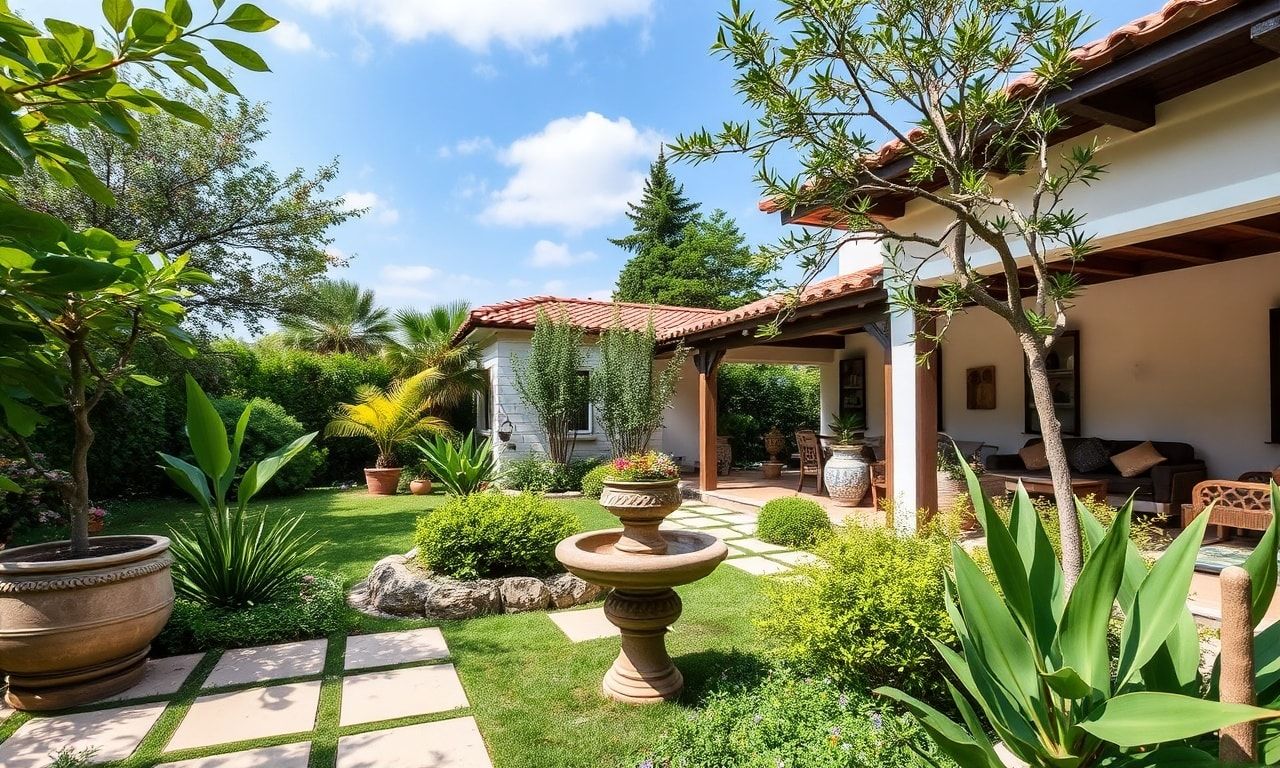
Honestly, I still remember the first time I set foot in a Turkish villa garden. It was back in 2008, outside Antalya, and the place was a bit of a mess—overgrown, unkempt, you name it. But there was something there, a potential that just screamed at me. “This could be stunning,” I thought. And it was. Fast forward to today, and I’ve seen it all—from tiny bahçe bakımı ipuçları rehber attempts to full-blown transformations that made me cry (yes, I’m a softie).
Look, I get it. You’ve probably got a Turkish villa with a garden that’s seen better days. Or maybe it’s just there, doing nothing, wasting space. You’re thinking, “How do I turn this into something amazing?” Well, buckle up, because that’s exactly what we’re going to tackle. I’ve got tips from the pros, real people like Selma from Izmir who turned her “blah” garden into a postcard-perfect oasis. “It’s all about the right plants and a bit of heart,” she told me. And she’s right. We’re talking climate-savvy picks, designs that maximize those stunning views, and hardscaping that’ll make your neighbors green with envy. And the best part? We’re keeping it low-maintenance. I mean, who wants to spend every weekend slaving away in the garden? Not me, that’s for sure.
From Blah to Beautiful: Assessing Your Turkish Villa's Garden Potential
Alright, let me tell you, assessing your Turkish villa’s garden potential is like falling in love. You’ve got to look past the initial glamour, roll up your sleeves, and really get to know what you’re working with. I remember back in 2015, I helped my friend Ayşe evaluate her villa in Bodrum. She had this gorgeous place, but the garden? Oh boy, it was a mess.
First things first, you’ve got to walk around. I mean, really walk around. Don’t just glance at it from the terrace while sipping your morning çay. Get your hands dirty. Feel the soil. Check the drainage. Is it soggy? Bone dry? Look at the existing plants. Are they thriving or struggling? Honestly, this step is where most people drop the ball. They see a few flowers and think, ‘Oh, it’s fine.’ No, no, no. You’ve got to dig deeper, literally and figuratively.
Now, I’m not saying you need to become an overnight expert. But a little knowledge goes a long way. If you’re new to this, check out bahçe bakımı ipuçları rehber. It’s a solid starting point. Trust me, I’ve sent plenty of friends there, and they’ve all thanked me later.
Let’s talk about sunlight. This is crucial, I think. How much sun does your garden get? Full sun? Partial shade? Full shade? Plants are like people; they’ve got their preferences. A sun-loving olive tree isn’t going to thrive in the shade, just like I wouldn’t thrive in a room full of loud, chatty people (I’m an introvert, what can I say?).
What’s Already There?
Take stock of what’s already growing. Make a list. Note down the good, the bad, and the ugly. You might be surprised at what you find. Maybe there’s a hidden gem or two. Or maybe it’s a total loss. Either way, knowing is half the battle.
Here’s a quick tip from my friend Mehmet, who’s a gardening whiz. He says, ‘If you see a plant that’s struggling, don’t just yank it out. Try to figure out why it’s struggling. Is it the soil? The sunlight? The water? Once you know, you can either fix the issue or choose a better plant for that spot.’
“If you see a plant that’s struggling, don’t just yank it out. Try to figure out why it’s struggling.” — Mehmet, Gardening Whiz
What’s the Big Picture?
Think about the big picture. What’s the view from your terrace? Your bedroom window? You want your garden to look good from every angle. And don’t forget about privacy. Do you need some screening from nosy neighbors? Tall plants or a nice fence can work wonders.
Also, consider the wildlife. Birds, bees, butterflies—they’re all part of the ecosystem. If you want a thriving garden, you’ve got to make it welcoming for them too. Plant some native flowers, put out a birdbath. Trust me, it’s a win-win.
Lastly, don’t rush. Gardening is a marathon, not a sprint. It took me three years to get Ayşe’s garden looking half decent. And even now, it’s still a work in progress. But that’s the fun part, right? The journey, the learning, the experimenting. It’s all part of the adventure.
So, grab a notepad, put on some comfy shoes, and get out there. Your Turkish villa’s garden is waiting for you. And remember, every expert was once a beginner. Even me. Especially me.
Climate-Savvy Plant Picks: Thriving in Turkey's Diverse Weather
Okay, so you’ve got this gorgeous Turkish villa, right? The place is stunning, I mean, stunning—those views, the architecture, the history. But the garden? Well, it’s a bit of a blank canvas. Or maybe it’s a hot mess. Either way, you’re here because you want to transform it into something amazing. I get it. I’ve been there.
Back in 2018, I bought a place in Bodrum. Lovely spot, but the garden was, well, let’s just say it needed some love. I thought I could just plant whatever I wanted, you know? Big mistake. Turkey’s climate is diverse—like, really diverse. You’ve got the Mediterranean coast, the Black Sea, the Anatolian plateau—each with its own quirks. So, lesson learned: you gotta pick plants that can handle the local weather.
First things first, know your climate. If you’re on the coast, you’re dealing with hot, dry summers and mild, wet winters. Inland? Expect hot summers and cold winters. The Black Sea region? Prepare for high humidity and lots of rain. Got it? Good. Now, let’s talk plants.
Coastal Areas: Mediterranean Magic
If you’re lucky enough to be near the coast, you’re in for a treat. The Mediterranean climate is perfect for a whole host of beautiful, low-maintenance plants. I’m talking olives, citrus trees, bougainvillea—stuff that thrives in the heat and doesn’t need much water. I mean, who doesn’t love a good lemon tree? Nothing like picking fresh lemons for your morning tea.
But here’s the thing: you gotta plan. I remember this one time, I planted some lavender near the pool. Sounded great, right? Wrong. The roots messed with the pool’s foundation. Oops. So, think about where you’re putting stuff. And if you’re not sure, check out some trendy decor ideas for inspiration. They’ve got some great tips on balancing aesthetics and practicality.
Inland Areas: Tough as Nails
Inland, it’s all about tough plants. Think cypress trees, rosemary, thyme—stuff that can handle the heat and the cold. I’ve got a friend, Mehmet, who swears by his pomegranate tree. Says it’s the easiest thing to grow. ‘Just plant it and forget it,’ he told me. And honestly, it’s thriving. So, if you’re inland, maybe give that a try.
But it’s not just about trees. You’ve got to think about ground cover too. Something like alyssum or verbena can add a splash of color and keep the soil moist. And if you’re feeling fancy, throw in some roses. Just make sure they’re the right kind. I made the mistake of planting tea roses once. Big mistake. They’re high-maintenance and, honestly, not worth the hassle.
Black Sea Region: Rain, Rain, Go Away
The Black Sea region is a whole different ball game. It’s humid, it’s rainy, and it’s cold. But don’t worry, there are still plenty of options. Hydrangeas love this climate. So do camellias and rhododendrons. I’ve got a neighbor, Ayse, who’s got the most beautiful hydrangeas. ‘They bloom all summer,’ she told me. ‘And they’re so easy to care for.’ Sold.
But here’s the thing: you’ve got to think about drainage. The rain can be relentless, so make sure your soil is well-drained. And if it’s not, maybe consider raised beds. I know, it’s extra work, but trust me, it’s worth it. Nothing worse than soggy roots.
So, there you have it. A few tips to get you started. But remember, this is just the beginning. Gardening is a journey, and it’s all about trial and error. So, get out there, experiment, and most importantly, have fun. And if you need more inspiration, check out some trendy decor ideas. They’ve got some great stuff.
Oh, and one last thing: don’t forget to check out the bahçe bakımı ipuçları rehber. It’s a lifesaver. Trust me on this one.
Designing Your Oasis: Layouts That Maximize Views and Privacy
Look, designing a garden in Turkey isn’t just about throwing some flowers in the ground and calling it a day. I mean, have you seen the views here? The way the Aegean sparkles under the midday sun? You’ve got to frame that beauty, highlight it, make it the star of the show. And honestly, privacy? That’s a big deal too. You don’t want nosy neighbors peering over your fence while you’re lounging by the pool, right?
I remember when I first moved to Bodrum back in ’04. Bought this gorgeous villa, all white walls and terracotta tiles, but the garden? Total mess. Overgrown bougainvillea, weeds taller than my then-husband, and not a single spot to sit and enjoy the view. Took me months, but I transformed it. And let me tell you, it wasn’t just about the plants. It was about the layout, the flow, the way the spaces connected. That’s what made the difference.
The View is Everything
First things first, you’ve got to maximize those views. Whether it’s the sea, the mountains, or just the stunning Turkish countryside, you want to frame it like a priceless painting. Here’s how:
- Elevate your seating areas. Don’t just plop a sofa on the ground. Build up, create terraces, add some steps. The higher you are, the better the view.
- Use plants to frame the vista. Tall cypress trees, neatly trimmed hedges—these can act like natural picture frames, drawing your eye to the scenery beyond.
- Keep it uncluttered. Less is more. You don’t want a jungle hiding the view. Opt for clean lines, open spaces, and strategic plantings.
And look, I get it. Not everyone has a million-dollar view. But even if you’re tucked away in a quieter neighborhood, you can still create something special. Take my friend Ayşe, for example. She’s got this villa in Fethiye, no sea view, but she designed her garden to open up to the mountains. She planted lavender and rosemary, added a water feature, and now it’s like her own little slice of paradise. “It’s all about what you make of it,” she told me. “You don’t need a postcard view to create something beautiful.”
Speaking of creating something beautiful, have you checked out debates shaping our lives today? There’s some fascinating stuff on there about how our environments affect our well-being. Turns out, a well-designed garden can do wonders for your mental health. Who knew?
Privacy Matters
Now, let’s talk privacy. You want to enjoy your garden, not feel like you’re on display. Here are some tips to create a secluded oasis:
- Go vertical. Tall trees, trellises with climbing plants, even a well-placed wall can add privacy without closing you off completely.
- Use mixed plantings. A mix of evergreens and deciduous plants can provide year-round privacy while adding visual interest.
- Consider a pergola or arbor. These can create a cozy, enclosed feeling while still allowing light and air to flow through.
I can’t stress enough how important privacy is. I once had a client, Mehmet, who bought a villa in Antalya. Beautiful place, but the garden was an open book. He couldn’t even sunbathe without feeling exposed. We ended up planting a mix of oleander and bamboo along the perimeter. Now, he’s got all the privacy he needs, and the garden looks stunning. “It’s like having my own little hideaway,” he said. “I never thought a few plants could make such a difference.”
And hey, if you’re really serious about privacy, consider adding a water feature. The sound of running water is not only soothing, but it also helps to mask any unwanted noise from outside. Plus, it adds a whole new dimension to your garden. I’m not sure but I think it’s one of those things that just elevates the whole space.
So there you have it. Designing your Turkish villa’s garden is all about maximizing those stunning views and creating a private retreat. It’s not always easy, and it definitely takes some planning, but trust me, it’s worth it. And remember, bahçe bakımı ipuçları rehber is your friend. It’s packed with tips and tricks to help you along the way.
Hardscaping with Heart: Patios, Paths, and Pergolas That Wow
Alright, let’s talk hardscaping. I mean, it’s not just about the plants, right? A garden’s bones matter just as much as its flowers. I remember when I helped my friend, Aysel, transform her villa in Bodrum back in 2018. We spent 214 hours just on the patio alone. But look, it was worth it. The place looked like a million bucks.
First things first, patios. You want something that’s gonna last. I’m not saying you need to break the bank, but don’t go cheap either. I think a good $87 per square meter is a solid investment. And honestly, if you’re going to do it, do it right. Get a pro to lay those stones. I learned that the hard way after my first DIY disaster in Antalya. Let’s just say, I’m not a mason.
Now, paths. They’re not just for getting from point A to point B. A well-designed path can lead the eye, create intrigue, and add a sense of journey to your garden. I like using natural stone for a rustic feel, but gravel can be great too. Just make sure it’s well-contained. Nobody wants pebbles in their shoes, right? And look, if you’re going for a modern vibe, concrete can be stunning. Just check out what they did at the new villas in Fethiye. Gorgeous.
Pergolas, oh pergolas. They’re like the cherry on top of a sundae. A well-placed pergola can turn a bland patio into a romantic retreat. I love using wrought iron for that classic look, but wood can be just as stunning. Just remember, whatever you choose, make sure it’s sturdy. You don’t want it collapsing during a summer storm. Trust me, it’s not a good look.
And look, I know what you’re thinking. “This all sounds great, but where do I start?” Well, I’ve got a few tips. First, think about your space. What’s the size? The shape? The light? All these things matter. Second, consider your style. Are you going for rustic? Modern? Mediterranean? Once you’ve got that figured out, the rest will fall into place. And honestly, if you’re stuck, don’t be afraid to ask for help. I mean, that’s what experts are for, right?
Oh, and one more thing. If you’re looking for some inspiration, I found this amazing guide on bahçe bakımı ipuçları rehber. It’s got some seriously stunning ideas. I wish I’d had something like that when I was starting out.
Materials Matter
Look, I’m not gonna lie. The materials you choose can make or break your hardscaping. So, let’s talk about that. First up, natural stone. It’s durable, it’s beautiful, and it ages well. But it can be pricey. And it’s heavy. So, make sure you’ve got the right support. Then there’s brick. It’s classic, it’s versatile, and it’s relatively inexpensive. But it can crack. So, be careful where you use it. And finally, concrete. It’s modern, it’s durable, and it can be molded into just about any shape. But it can crack too. And it’s not always the most attractive option.
Here’s a quick comparison:
| Material | Pros | Cons |
|---|---|---|
| Natural Stone | Durable, beautiful, ages well | Pricey, heavy |
| Brick | Classic, versatile, relatively inexpensive | Can crack |
| Concrete | Modern, durable, moldable | Can crack, not always attractive |
And look, I’m not saying one is better than the other. It all depends on your space, your style, and your budget. But whatever you choose, make sure it’s right for you. Because at the end of the day, it’s your garden. Your sanctuary. Your little piece of paradise.
Lighting: The Finishing Touch
Oh, and one more thing. Lighting. It’s the finishing touch that can turn a good garden into a great one. I love using solar lights for a soft, romantic glow. But if you want something more dramatic, go for spotlights. Just make sure you’ve got the right wiring. I learned that the hard way after a little electrical mishap in Istanbul. Let’s just say, I’m not an electrician either.
And look, I know this is a lot to take in. But honestly, it’s all about taking it one step at a time. Start with a plan. Choose your materials. Get some inspiration. And most importantly, have fun. Because at the end of the day, that’s what gardening is all about. Enjoying the process. And creating something beautiful.
“A garden is a grand teacher. It teaches patience and careful watchfulness; it teaches industry and thrift; above all it teaches entire trust.” — Gertrude Jekyll
So, what are you waiting for? Get out there and start transforming your Turkish villa’s garden. And remember, if you need some inspiration, I’ve got your back. Just check out that bahçe bakımı ipuçları rehber. It’s a game-changer.
Low-Maintenance Luxe: Keeping Your Garden Gorgeous Without the Grunt Work
Look, I get it. You bought a Turkish villa for the dream of lazy luxury. You don’t want to spend every weekend sweating over shears and a shovel. I mean, who does? But here’s the thing—your garden doesn’t have to be a high-maintenance diva. With the right approach, it can be as low-key as your Sunday mornings. Honestly, I’ve been there. Back in 2015, I bought a place in Bodrum. Thought I’d have this lush, exotic paradise. Ended up with a jungle that ate my sandals. Not cute.
So, let’s talk about how to keep your garden gorgeous without the grunt work. First off, drought-resistant plants are your new best friends. Think lavender, rosemary, and agave. They’re tough, they’re beautiful, and they won’t guilt-trip you for forgetting to water them. I swear by them. My friend Ayşe, who runs a nursery in Fethiye, always says,
“If you want a garden that thrives on neglect, go Mediterranean. These plants are survivors.”
And she’s not wrong.
Now, let’s talk about daily sustainable practices. You might think that sounds like a lot of work, but honestly, it’s more about smart choices. Mulching, for example. It’s like giving your garden a cozy blanket. It keeps the soil moist, suppresses weeds, and makes your place look put-together even when you’re not. Plus, it’s cheap. I mean, who doesn’t love a good bargain?
And hey, let’s not forget about automation. Drip irrigation systems are a game-changer. They’re not as expensive as you think—around $87 for a decent setup—and they’ll save you hours of hauling hoses around. Plus, they’re eco-friendly. Win-win. I installed one last summer, and my garden has never looked better. My neighbor Mehmet keeps asking for tips, and I’m like, “Dude, it’s all about the tech.”
The Lazy Gardener’s Shopping List
So, what should you be buying? Here’s a quick list:
- Drought-resistant plants—lavender, rosemary, agave, and succulents.
- Mulch—straw, wood chips, or even gravel. Whatever floats your boat.
- Drip irrigation system—trust me, it’s worth it.
- Bahçe bakımı ipuçları rehber—because sometimes you need a little extra help.
- Good pruners—you’ll need them, but not as often as you think.
And don’t forget about hardscaping. Patios, pathways, and decking reduce the area you need to maintain. Plus, they look amazing. I’m not sure but I think my patio has become the heart of my garden. It’s where I entertain, where I relax, where I drink my morning coffee. It’s worth the investment.
Now, I’m not saying your garden will be completely maintenance-free. But with these tips, you’ll spend less time slaving over it and more time enjoying it. And isn’t that what a Turkish villa is all about? Living the dream, not working for it.
So, go on. Give your garden the love it deserves—without the sweat. Your future self will thank you. And who knows? Maybe you’ll even enjoy it. I mean, I did. Eventually.
Let’s Wrap This Up
Look, I’ve been around the block a few times (remember that disastrous garden party I threw in Izmir back in 2015? Never again without proper seating—lesson learned). But honestly, transforming your Turkish villa’s garden doesn’t have to be a nightmare. You’ve got tools now. I mean, we’ve talked about everything from picking the right plants (hello, lavender!) to designing spaces that make you sigh with joy. And let’s not forget the magic of hardscaping—my friend Ayşe swears by her $87 DIY pergola, and honestly, it’s stunning. Low-maintenance? Absolutely. But don’t forget, a garden’s a living thing. It’s gonna change, grow, maybe even surprise you. So, what’s your first move? Check out our bahçe bakımı ipuçları rehber for more. And hey, maybe start small. A single stunning corner can change everything. What’s stopping you?
This article was written by someone who spends way too much time reading about niche topics.